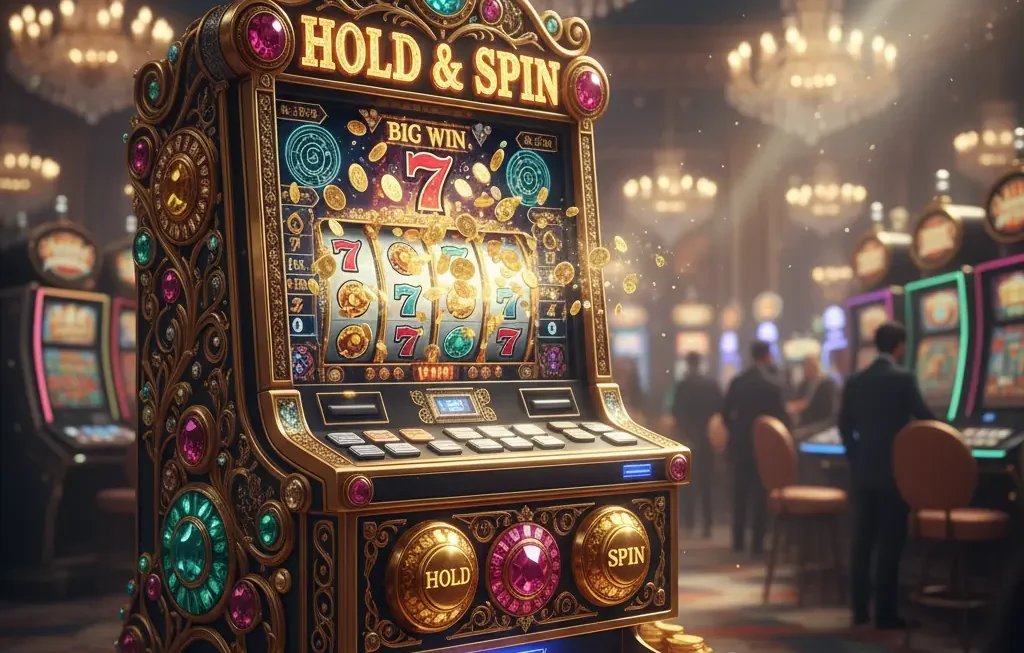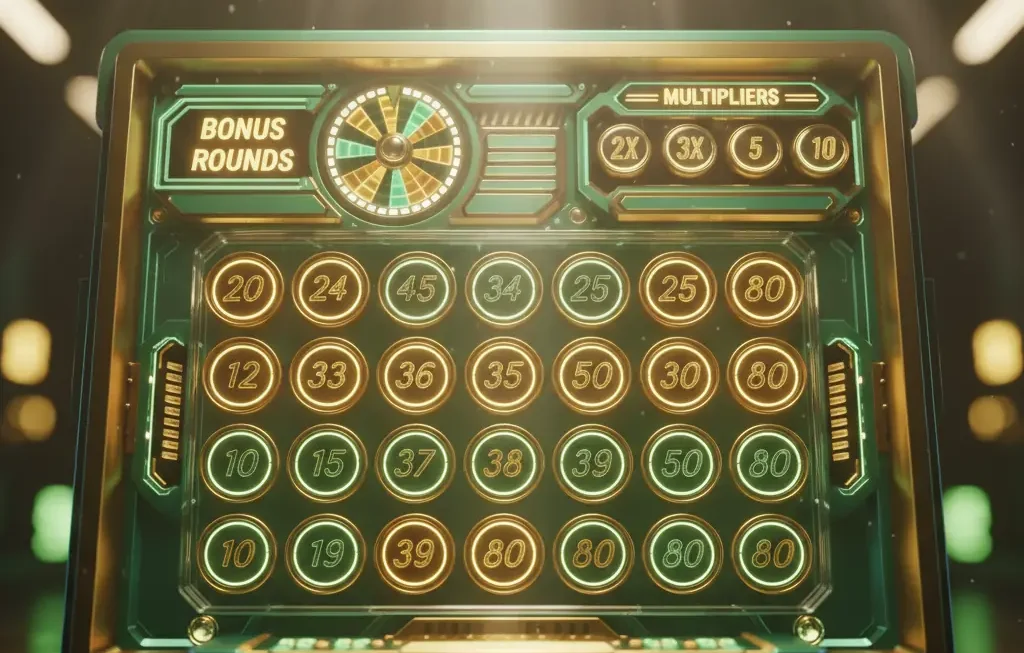
Keno, with its blend of chance and anticipation, holds a unique allure. The thrill of marking numbers, watching the draw unfold, and hoping for a match is captivating. But the real excitement ignites when bonus rounds and multipliers enter the game. These features can dramatically amplify winnings, transforming a modest payout into a substantial windfall. This is based on personal experience.
Multipliers, as the name suggests, multiply the standard payout by a predetermined factor. A 2x multiplier, for instance, doubles the winnings, while a 5x multiplier quintuples them. Imagine the surge of adrenaline when your numbers hit, and a hefty multiplier kicks in!
However, the key to truly unlocking the potential of Keno lies in understanding the activation frequency of these bonus rounds and multipliers. Knowing how often they appear allows players to refine their strategy, optimize their bets, and ultimately, increase their chances of hitting a significant payout. It’s about transforming Keno from a game of pure luck into a calculated pursuit of fortune. I’ve found that a more informed approach significantly enhances the overall Keno experience, making each round more engaging and potentially more rewarding.
Keno Basics: A Quick Refresher
Keno, at its heart, is a simple lottery-style game that offers the potential for exciting payouts. The core gameplay revolves around selecting numbers, often called “spots,” from a grid typically numbered 1 through 80. Players choose how many spots they want to play, usually ranging from 1 to 10 or even 15, depending on the specific keno game.
Once the spots are chosen, the game randomly draws a set of numbers, typically 20. The number of matches between the player’s chosen spots and the drawn numbers determines the payout. These matches are referred to as “catches.” The payout is dictated by the “paytable,” which outlines the winnings for different numbers of catches based on the number of spots played.
The house edge is the casino’s advantage in the game, and it can vary significantly between different keno variations. A higher house edge means a lower chance of winning in the long run. It’s important to be aware of the house edge before playing any keno game.
I still remember the first time I stumbled upon keno. It was a rainy afternoon, and the flashing numbers on the keno board caught my eye. The simplicity of choosing numbers and waiting for the draw was instantly appealing. Although the house always wins eventually, there is definitely a thrill of the game. Keno can be a fun and engaging pastime, especially when approached with a clear understanding of the rules and odds.
Unveiling Keno Bonus Rounds
The world of Keno is more than just picking numbers and hoping for a match; it’s a realm sprinkled with the excitement of bonus rounds. These rounds add an extra layer of thrill to the game, offering increased chances of winning and unique gameplay experiences.
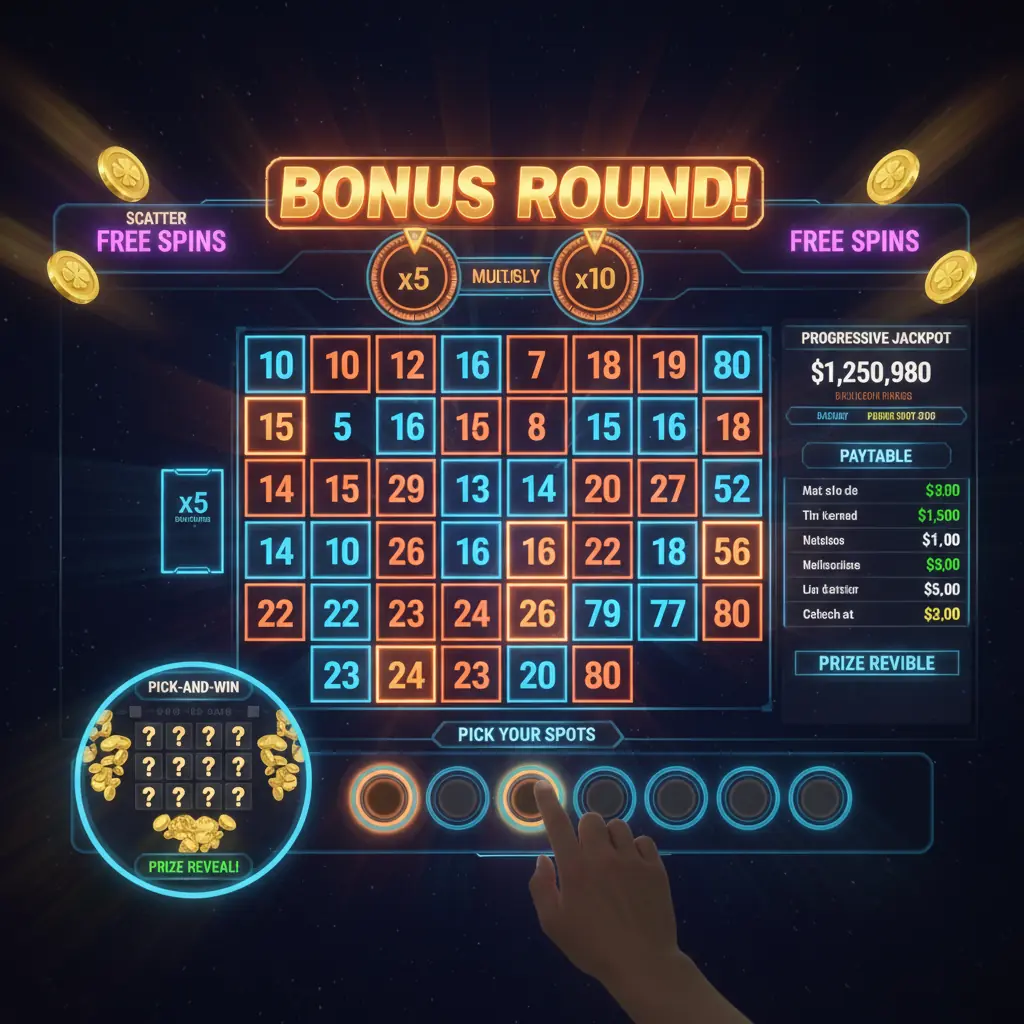
So, how does one unlock these coveted bonus rounds? The activation methods vary depending on the specific Keno game. One common trigger involves landing scatter symbols on the Keno board. These symbols, unlike regular numbers, don’t need to appear in a specific sequence to activate the bonus. Other games might require hitting a particular combination of numbers or achieving a certain number of matches in a single round to unlock the bonus.
Once triggered, the possibilities are diverse. Free spins are a frequent reward, allowing players to play additional rounds without wagering more credits. Another popular type is the “pick-and-win” mini-game, where players select from a set of hidden symbols to reveal instant prizes. Some Keno variations even feature more elaborate mini-games with interactive elements and progressive jackpots.
The first time a Keno bonus round was triggered was a thrilling experience. The anticipation built as the required symbols aligned, followed by the rush of adrenaline as the bonus game launched. It’s this element of surprise and the potential for amplified rewards that makes Keno bonus rounds so appealing, transforming a simple number game into a captivating adventure.
The Power of Multipliers: Elevating Keno Winnings
In the exciting world of Keno, a multiplier is a game-changing feature that can dramatically increase your winnings. Think of it as a magic factor that supercharges your payout! Essentially, a multiplier takes your standard win and multiplies it by a specific number, resulting in a much larger prize.
How does it work? Simple. If you win a standard Keno game and a bonus round activates a 2x multiplier, your payout doubles. Imagine hitting a winning combination that would normally pay out $50. With a 2x multiplier, that becomes $100! The higher the multiplier, the bigger the potential win. You might encounter multipliers like 5x or even 10x, significantly boosting your bankroll.
These multipliers are often found in Keno bonus rounds, adding an extra layer of excitement and opportunity. Bonus rounds trigger randomly or through specific in-game events, offering the chance to win free games with active multipliers. This is where the real potential for large payouts lies. One time, I was playing a Keno game and triggered a bonus round with a 5x multiplier. What was already a good win turned into a small fortune!
Decoding Multiplier Activation Frequencies
Multiplier activation frequencies in Keno are not arbitrary; they are the result of a complex interplay between several key elements. These include the Random Number Generator (RNG), game design, and inherent volatility. Understanding how these factors interact is crucial for players looking to optimize their gameplay.
The probability of hitting multipliers is meticulously designed into each Keno variation, influencing the overall odds. Examining these odds reveals why some games offer more frequent, albeit smaller, multipliers, while others present the chance for larger multipliers that appear less often. The subtle differences in Keno game rules can lead to very different multiplier activation possibilities. Comparing classic Keno with modern variants like Power Keno or Super Keno reveals how game designers vary multiplier frequencies to create different playing experiences. For example, a game might boost excitement by increasing the chance of a small multiplier, therefore, increasing player interaction and boosting confidence.
The hypergeometric distribution can be a useful tool to estimate the probability of specific outcomes in Keno, including multiplier activation. While the actual implementation of multipliers might vary across different Keno games, this calculation helps one think critically about the connections between number selection, the total numbers drawn, and the probability of activation. This understanding has allowed for adjustments in play style, shifting focus towards embracing the probabilities of hitting smaller multipliers more consistently, rather than chasing elusive, large multipliers with lower probability.
Understanding Random Number Generators (RNGs)
At the heart of any modern Keno game lies the Random Number Generator (RNG). In essence, it’s an algorithm designed to produce a sequence of numbers that cannot be reasonably predicted. This process is used for fairness, ensuring that every number in a Keno game has an equal chance of being drawn, and subsequently, activating any potential multipliers associated with those numbers.
A common misconception is that RNGs can be “hot” or “cold,” leading players to believe that recent outcomes influence future results. However, a well-designed RNG operates independently, meaning that each draw is a fresh start with no memory of previous rounds.
Game Design and Multiplier Frequency
Game design is a crucial aspect influencing multiplier activation frequencies. Players should look for specific elements, like the number of spots they choose. Does selecting more spots increase the chance of a multiplier, or does it skew the odds against them? Also, analyzing the paytable structure is key. Games may emphasize frequent, small multipliers or less frequent, but much larger ones.
Studying this component is important for several reasons. It allows players to compare games and select those that align with their risk tolerance. Understanding how game design influences multiplier frequency transforms players from passive participants to informed strategists.
Strategies for Maximizing Multiplier Potential
To truly boost your Keno experience, understanding and strategically leveraging multipliers is key. It’s about making informed choices that align with your risk tolerance and bankroll.
Choosing the Right Keno Variation: Not all Keno games are created equal. Some variations offer more frequent, albeit smaller, multipliers, while others boast the potential for huge multiplier payouts, but with less frequent activation. Research different Keno games and understand their multiplier activation tendencies. Games with more frequent multipliers might be better for players looking for steady, incremental wins, while those with less frequent, larger multipliers are suited for the thrill-seeking, high-risk player.
Bankroll Management is Crucial: Playing Keno with multipliers can be exciting, but it’s easy to get caught up in chasing the big win. Establish a firm budget before you start playing, and stick to it. Only gamble with money you can afford to lose. Consider reducing your bet size to extend your playtime and increase your chances of hitting a multiplier. A disciplined approach to bankroll management is essential for long-term enjoyment and minimizing potential losses.
Strategic Spot Selection: The number of spots you choose on your Keno card also influences your odds and potential payouts. Selecting a higher number of spots increases the potential for a larger payout, especially when a multiplier is applied. However, it also decreases the probability of hitting all your numbers. Experiment with different spot selections to find a balance between risk and reward that suits your playing style. Some players prefer to focus on a smaller number of spots, increasing their chances of hitting those numbers and triggering smaller, more frequent multiplier wins. Others opt for a larger number of spots, hoping to land a significant multiplier-enhanced payout.
I, myself, got caught in the thrill of the game once with a small amount, started with a variation that offered frequent multipliers, and managed to extend my playtime considerably. By carefully managing my bets and strategically selecting spots, I was able to capitalize on two small multipliers and walk away with a profit, proving that a calculated approach can significantly improve your Keno experience.
Avoiding Common Pitfalls and Misconceptions
Keno, with its potentially large payouts, can be quite tempting, especially when multipliers are involved. However, the glittering allure of big wins can sometimes cloud judgment, leading to some common pitfalls and misconceptions. One of the biggest mistakes players make is believing that past results influence future outcomes. Each Keno draw is a completely random event, so clinging to the idea that certain numbers are “due” to hit is a surefire way to deplete your bankroll. I remember early in my Keno playing days, I became convinced that the number 42 was my lucky number and that it was bound to appear soon. I kept selecting it, increasing my multiplier, chasing this vision of success, and ended up empty-handed. Lesson learned!
Another dangerous trap is chasing losses. The frustration of losing can lead you to increase your bets, including multipliers, in an attempt to quickly recover your money. This is a slippery slope that often results in even greater losses. Think of it as digging yourself deeper into a hole. Resist the urge to chase, and instead, stick to your predetermined budget and strategy. Understand the paytable. Before diving into any Keno game, especially one with multipliers, take the time to thoroughly understand the paytable. See what the game offers, the odds and probabilities, the value of your picks, the winning combinations, and how the multiplier affects payouts for different number combinations. Misinterpreting the paytable can lead to unrealistic expectations and poor decision-making. For instance, you might assume that a 10x multiplier guarantees a huge payout, but it only applies if you hit a specific combination of numbers. By being aware of these misconceptions and actively avoiding these pitfalls, you can play Keno multipliers responsibly and increase your enjoyment of the game without ruining your finances.
The Future of Keno: Emerging Trends in Bonus Rounds and Multipliers
The realm of Keno is poised for exciting transformations, particularly in bonus rounds and multipliers. Imagine progressive multipliers that swell with each consecutive game, creating tantalizing jackpots for patient players. The future may bring skill-based bonus games, blending brainpower with chance, where strategic decisions amplify winnings.
Technology will undoubtedly be a major catalyst, with online casinos leading the charge. Expect to see innovations like augmented reality Keno, immersing players in vibrant, interactive environments. Multipliers could become intricately woven into the game’s narrative, triggered by specific patterns or numbers hit. They might even become personalized, adapting to an individual’s playing style and risk tolerance. The thrill of Keno lies in its simplicity, but the future promises a surge of engaging complexities, making each game a unique experience.
Conclusion
Understanding multiplier activation frequencies is the cornerstone of strategic Keno. By recognizing patterns and probabilities, players elevate their gameplay from chance to informed decision-making. Mastering Keno requires more than mere luck; it demands a grasp of the underlying mechanics and the discipline to apply strategic insights.
Remember, responsible gaming is paramount. Armed with knowledge of multiplier tendencies, players can approach Keno with a calculated edge, but it’s crucial to set limits and adhere to them. This blend of strategy and prudence is the hallmark of a savvy Keno enthusiast. Players are encouraged to explore different Keno variations, honing their skills in demo mode to refine their tactical approach.
Keno is not just a game; it’s a puzzle, and the multipliers and a test of wits. So, play responsibly, practice your strategies, and may the frequencies be ever in your favor.